How to read a website quote: what is included, what is missing, and what it costs over three years
Two quotes for the same website can differ fourfold and both be honest, so the work is in knowing what each one leaves out.
7 min read
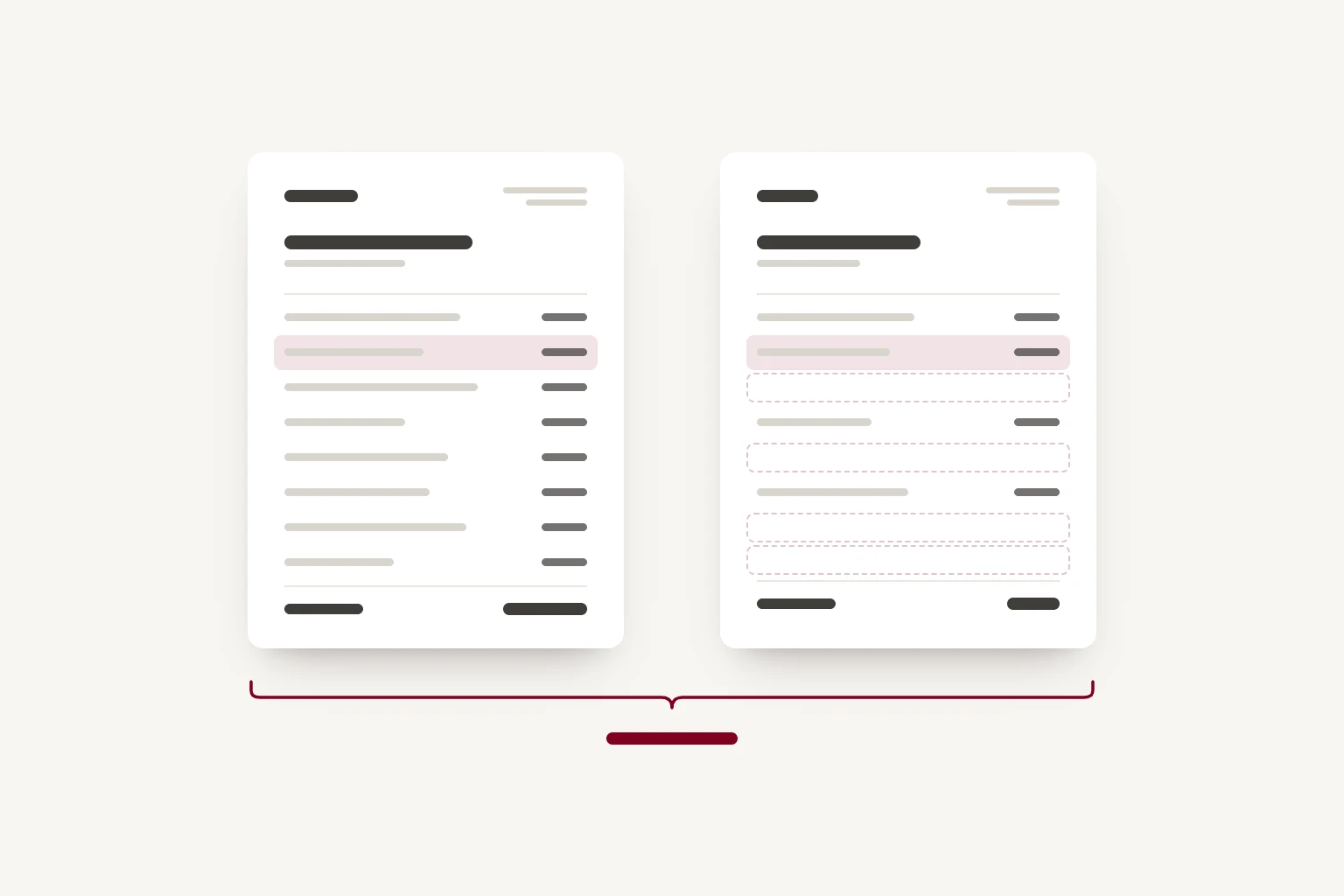
A website quote is hard to judge because the thing being quoted is not defined anywhere. Two proposals for "a new website for a small business" can differ fourfold and both be honest. They're describing different amounts of work, different ownership, and very different bills afterwards. Comparing them means lining up three things: what is being built, what has been left out, and what the whole arrangement costs over three years rather than on the day you sign.
This is not about finding the cheapest quote. It's about knowing what each one is, so that if you choose the expensive one, you're doing it deliberately.
If you'd like the market context first - what freelancers, studios and agencies typically charge across the UK and Europe - our website cost calculator gives price ranges, including ranges that are not ours. This piece is about reading the document in front of you.
What a good quote itemises
A quote you can evaluate separates the work rather than presenting one figure for "website". At minimum, you should be able to see these as distinct lines, even if they're priced together:
- Discovery and structure - the sitemap, the page inventory, what each page is for.
- Design - how many pages are designed from scratch, and which are variations on those.
- Build - the pages themselves, plus anything interactive quoted separately.
- Content setup - who places the words and images, and how many pages of it.
- The CMS - what you'll be able to edit yourself afterwards, and what you will not.
- Migration - moving content from an existing site, and the redirect map.
- Testing and launch - devices, browsers, accessibility, the switch-over.
- What happens after launch - the support period, then any ongoing arrangement.
If a quote is a single number and a paragraph, that's not a reason to reject it. It's a reason to ask for the breakdown, and the way the question is answered tells you a lot.
Seven things that are often missing
These are the items that turn a fixed price into a variable one. Many quotes leave out several of them, from either side, without anyone being dishonest.
1. The words. Copywriting is easy to leave out of a budget, and projects often run late waiting for words rather than code. Professional copy costs a few hundred euros a page. Decide who is writing before you decide who is building, and if the answer is you, be realistic about when.
2. Photography. A custom design is largely a frame for your images, and stock photography often undermines it. Without good photography, the design has less to work with, whatever it cost.
3. Migration and redirects. If you have an existing site, someone has to map every old address to its new equivalent. Skipping it can be the most expensive omission on this list, because it can cost you search rankings you already have.
4. Third-party costs. Fonts, stock images, a booking system, a payment provider, transactional email, an analytics tool. Each is small, and they belong in the total rather than arriving afterwards.
5. Accessibility. It's increasingly a legal requirement as well as the right thing to do. Ask whether it's included or planned as a later phase, because the answers differ, and fixing it later costs more.
6. Post-launch support. How long after launch are fixes free, and what counts as a fix rather than a change? A month of included support is common. If no period is stated, ask before you sign.
7. Training. An hour showing you the CMS, and a page of notes. It's easy to provide and often forgotten, and without it, many sites go unedited for months.
The column that matters more than the price
Website costs come in two kinds: once, and ongoing. Quotes often show the first prominently and the second in passing, even though the second adds up to more over time.
Work out the three-year total instead. Take the build price, then add thirty-six months of everything recurring: the platform subscription or hosting, the plan tier you'll need rather than the entry one, app and plugin subscriptions, the care or support arrangement, the domain and email, and any transaction fees if you sell.
Do it for each option and the ranking often changes. A cheaper build with an expensive monthly bill can overtake a dearer build you own, and on the figures below that happens just inside three years. It's the same arithmetic that makes leasing look cheap in year one.
Be careful not to overstate this. The three-year comparison is often closer than either side of the argument admits, and with a modest monthly bill the platform can still be ahead at thirty-six months. What does not change is the shape: one line keeps climbing at the same rate for as long as you keep the site, and the other flattens out. The case for owning is not that it's much cheaper by year three. It's that by year five the gap is real, and you also own the thing.
Two notes on the recurring costs. Hosting a professionally built site is inexpensive: tens rather than hundreds a month. And the care line is real work rather than a subscription for nothing: updates, monitoring, backups, small changes, someone noticing when something breaks. If a quote shows no ongoing cost at all, the upkeep still has to happen. It has been left to you.
The ownership questions
Four questions whose answers change what you're buying more than any figure on the page. Ask them in writing.
Who owns the code and design when you have paid? The answer should be: you, outright, with no licence to renew.
Where does the site live, and in whose name? Hosting in your own account means you can change developer without moving anything. Hosting in theirs means leaving becomes a project.
If we part company, what do I take with me? A repository, a CMS account, the domain, the hosting. If the answer is "an export, and you would need to rebuild", you do not own the site outright. That can be fine, as long as the price reflects it.
Is anything in this build proprietary to you? Some studios build on their own framework or their own theme system. It's not disqualifying, but it narrows the field of people who can take over later, and you should know before rather than after.
Comparing two quotes that are not comparable
When the numbers are far apart, the difference usually comes down to one of four things.
Scope. One is designing twelve pages and the other is designing three and repeating them. Count the designed pages, not the total pages.
Depth of design. Adapting a theme, designing something light and custom, and designing from scratch are three different jobs at three prices. Ask which one you're being quoted for.
Who is accountable afterwards. A studio price usually includes project management, testing and someone to call. A freelance price is closer to the hours. Both are legitimate. Whoever you choose, ask who covers support if they are unavailable.
Overhead. A large agency does much of the same work as a small studio at around half as much again per hour, and the difference is mostly account managers, offices and layers of approval. A big project may need that structure. A small-business site usually does not.
A short checklist before you sign
Ask for the itemised breakdown. Confirm who writes the words and who supplies the images. Confirm the redirect plan if you have an existing site. Add up thirty-six months of recurring costs for every option. Get the four ownership answers in writing. Check the support period and what counts as a fix. Ask what happens if the timeline slips because your content is late, since that's one of the most common causes of delay.
None of that needs technical knowledge. It needs the person quoting to be specific, and a good one will be glad you asked.
If you'd rather not work through that list by eye, our free prompt for comparing quotes builds one you can paste into ChatGPT, Claude or Gemini with the documents attached. It checks for the same things this piece does, and it's good at listing what each quote leaves out.
For what any of this should cost from anyone - freelancer, studio or agency, in pounds or euros - the cost calculator shows the ranges. Our own prices are on the pricing section, for the same reason: a quote is easier to judge when someone has already told you what it should look like.