Seven ways to help AI assistants find and recommend your business
Nobody can promise you a recommendation from an AI assistant, but you can remove the things on your site that stand in the way of one.
6 min read
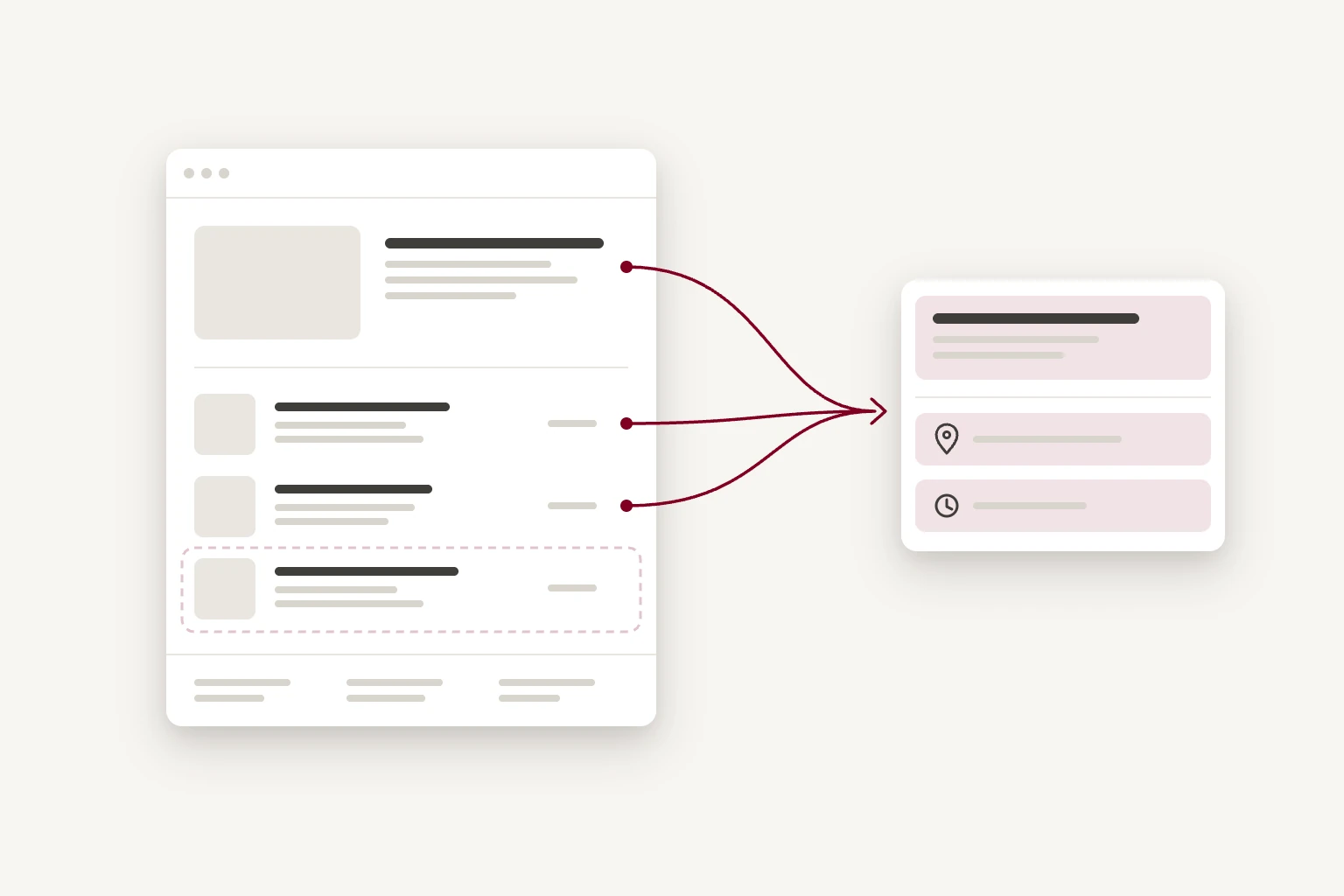
AI assistants draw on the open web in several ways, and like search engines, they do better with pages that are served ready to read, plainly written and clearly labelled. Making your site one of those is mostly technical housekeeping: structured data, clean markup, pages that can be crawled, and facts stated in sentences a machine can quote. None of it guarantees a recommendation, but it affects whether you're considered for one.
Start with the caveat. No one can promise that an assistant will recommend your business. There are many of these systems, they change, they weigh sources differently, and none of them publishes how it ranks. Anyone offering a guaranteed result is guessing. What follows is the part within your control: being readable, being quotable, and not being invisible by accident.
1. Serve pages that are readable when they arrive
This is the foundation for everything else, so it comes first.
Some websites send a mostly empty page and then build the real content in the visitor's browser using JavaScript. A person does not notice, because it happens in a moment. A machine reading your page may notice a great deal, because what it receives is a shell where your content should be. Search engines have become reasonably good at handling this. AI tools vary, and several are much less patient about it.
The fix is to build pages on the server, so the words are in the page the moment it's requested. If you're having a site built, this is one of the most useful questions to ask about how it works. If you already have one, view the page source and search for a sentence from your homepage. If it's missing, that's the problem to fix.
2. State your facts in plain sentences
AI tools often build answers from several sources, and short, self-contained, factual sentences are the easiest for them to use.
So write them. "We are a physiotherapy clinic in Palma, open Monday to Saturday, treating sports injuries and post-operative rehabilitation" can be quoted. "Our journey began with a passion for movement" cannot, and neither can anything phrased as a slogan. This does not mean writing without character. It means making sure that somewhere on the page, the plain version exists in one sentence.
The same applies to answers. If a question has a real answer - what you charge, how long it takes, whether you cover a particular area - put the answer in the first line of the paragraph, then explain around it. Burying it in the third paragraph makes it harder to find, and harder to repeat correctly.
3. Add structured data, and make it describe your business
Structured data is a small block of machine-readable information in the page, in a format called JSON-LD, stating in a standard vocabulary who you are, what you do, where you are and how to reach you. It's the difference between an AI tool working out your details from your prose and reading them stated outright.
For most businesses the useful pieces are an Organization or LocalBusiness block for the business itself, FAQPage on anything written as questions and answers, and Product, Service or Event where those apply. If your site already has structured data, check that it describes the business, rather than only marking up a breadcrumb trail or a search box, which is common. Older formats also linger; JSON-LD is the format search engines and AI tools most commonly read.
4. Do not lock the door by accident
Some sites block AI crawlers, deliberately or otherwise. Publishers who sell subscriptions have reasons to. A business that would like to be recommended does not.
Two things are worth checking. First, your robots.txt file, at yourdomain.com/robots.txt: if it names AI crawlers and disallows them, that decision is being made on your behalf, sometimes by a plugin or a default setting you never chose. Second, whether important content sits behind anything a crawler cannot pass - a login, a cookie wall that hides content until it's dismissed, a form, or an infinite scroll with no plain links underneath. If a crawler cannot reach it, it cannot be used in an answer.
There's also a newer, optional convention called llms.txt: a plain-text summary of your site written for AI assistants. It's not yet widely used, and not having one costs you nothing today. It's cheap to add and worth knowing about.
5. Keep your facts the same everywhere
Many AI tools compare sources. When your address, phone number, opening hours or business name appear differently across your website, your Google Business Profile, your social accounts and the directories that list you, the inconsistency makes each source harder to trust.
This is the least technical item here, and it's easy to leave undone. Choose one version of your name, address and phone number, write it down, and make every listing match it exactly, down to whether you use "Ltd" and how the phone number is spaced. Then check the old listings you have forgotten about, because those are often the ones that are out of date.
6. Give each thing you do one clear page
If your services are all on a single page, an AI tool answering a question about one of them has to pick it out from a page about six things, and may not. If the same service is spread over four near-identical pages, none of them is the obvious source.
One clear page per thing, at a sensible address, with a heading that names it in the words a customer would use rather than the words the industry uses. Headings should step down in order - one h1, then h2 for sections, then h3 beneath them - because that ordering is how both AI tools and screen readers work out the shape of a page. Skipped levels still look fine to a visitor, but they make the structure harder to follow.
7. Publish the answers people want
The questions people ask an AI assistant are often the ones they would be slightly embarrassed to ask a salesperson: what does this really cost, how long will it take, what happens if it goes wrong, is this right for someone like me.
Sites that answer those questions plainly are more likely to be quoted, because there's something there to quote. A site that sends every such question to a contact form gives an AI tool nothing to use. Publishing your pricing, or at least price ranges, is the clearest example: it can feel exposing, and it gives both people and AI tools something concrete.
Where to start
In order of return: check that your pages are readable when they arrive, add structured data describing your business, make sure nothing is blocking crawlers, then work on the writing. The first three can often be done in a day of technical work, and they come first because good writing cannot help if a machine cannot read the page.
Our free website health check tests several of these for you: whether you have structured data and whether it describes your business, whether anything is blocking AI crawlers, and whether your headings are in order. It reads only what is already public, so you can run it on a competitor's site as easily as your own.